How to keep mice out of your house
Block pencil-width gaps, target runways with traps, and clean safely. The bonus: air sealing that deters mice can also cut energy waste.
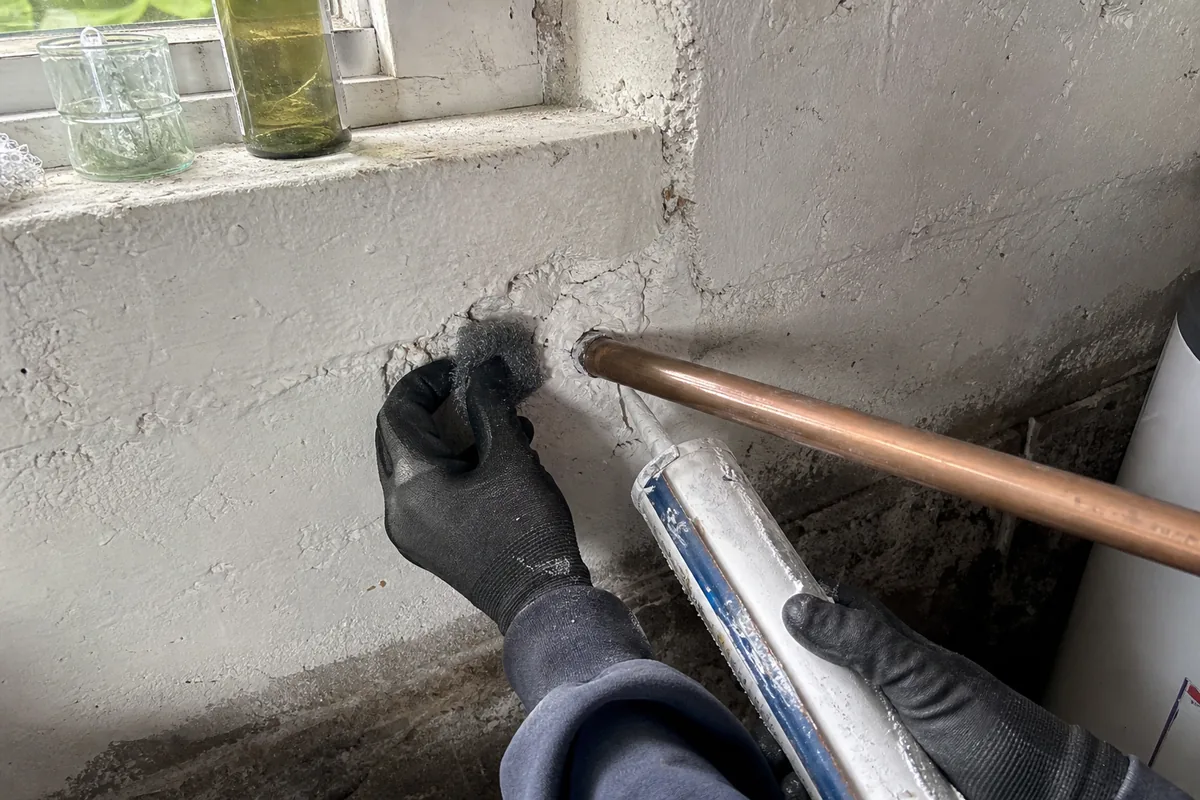
How to keep mice out of your house? Block the gaps they use, then trap and clean safely.
Find the ways mice get in
The first step is understanding entry points. The CDC says, "Mice can fit through a hole the width of a pencil (1/4 inch or 6 millimeters in diameter)." Treat every pencil-width gap as a doorway.
Start where utilities enter. Check around pipes, cables, and dryer vents. Look at foundation cracks, sill plates, and rim joists. Scan door thresholds and garage door edges. Inspect attic vents and crawlspace grates.
Use a flashlight. Stand outside at night and have someone shine light from inside. Light leaking out marks an air path. Mice use the same path.
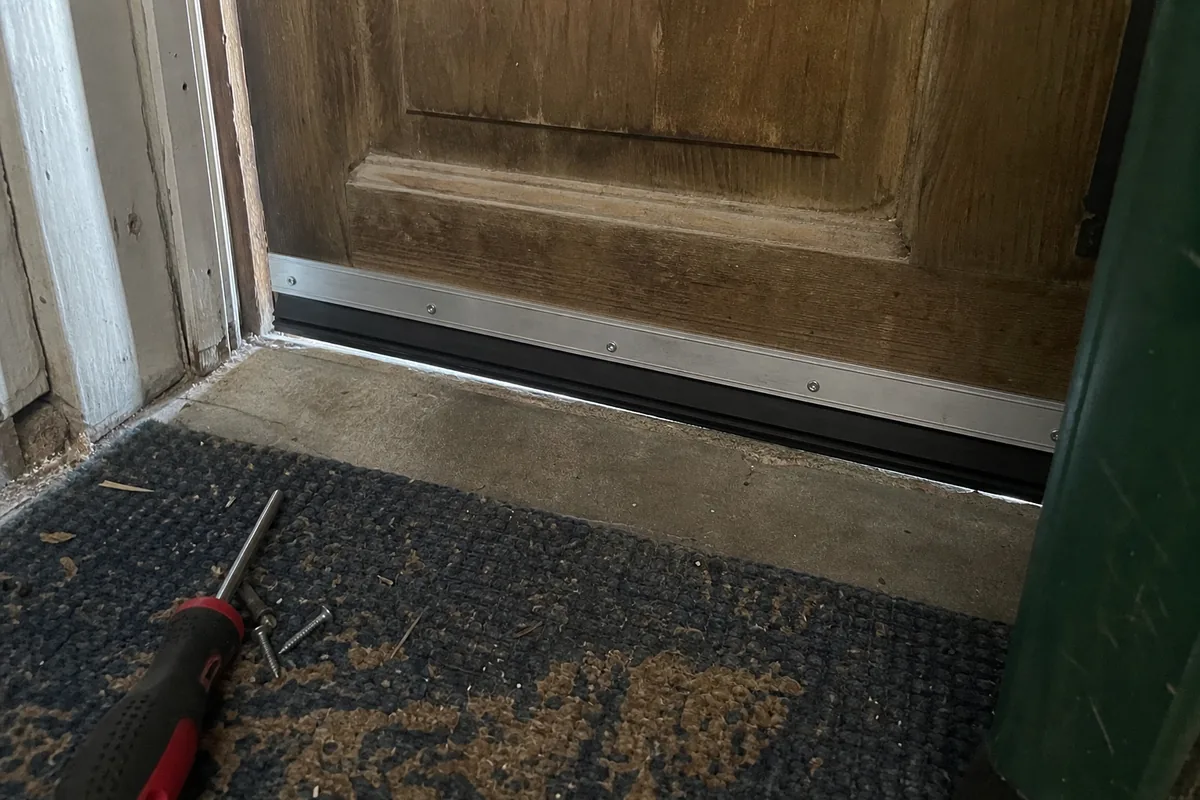
Seal 1/4-inch and larger gaps first
Exclusion works because it removes access. Focus on anything a pencil can touch. Pack irregular holes with steel wool. Lock it in place with a bead of exterior-grade caulk. For larger voids, back the opening with wire mesh, then seal the face.
The CDC specifies tight screening. "19-gauge or greater metal mesh, wire screening, or hardware cloth (1/4-inch or less spacing is preferred)," is the spec to hit. Hardware cloth is a rigid wire mesh. Gauge is a way to describe wire thickness.
Close door gaps with door sweeps. Renew brittle weatherstripping on doors and windows. Cap gaps at siding edges and under thresholds. Cover attic and crawl openings with that tight hardware cloth. Finish with a smooth seal so rodents cannot pull it free.
Air sealing has a payback beyond pests. The Department of Energy puts it plainly: "In a typical home, air leakage accounts for 25% to 40% of the energy used for heating and cooling." Seal the mouse holes and you block energy leaks too.
Place traps where mice already travel
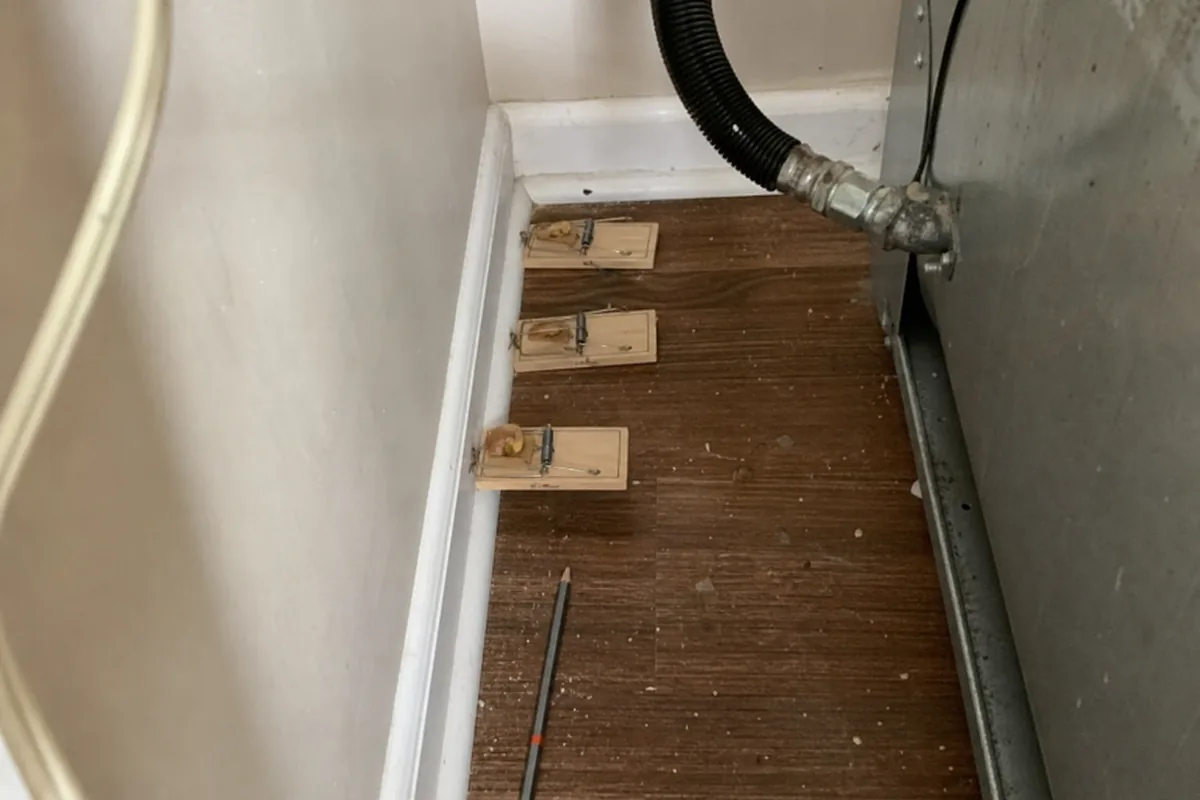
Traps work best where mice already move. Edges guide them. The CDC advises precise placement: "Put the baited end of the trap next to the wall so it forms a \"T\" with the wall."
Set snap traps along baseboards and behind appliances. Aim for known runways. You may see droppings, rub marks, or gnawing there. Place several traps a few feet apart. Keep traps away from pets and kids.
Leave traps in place for several days. Refresh bait and reset as needed. Continue exclusion while you trap. Blocking entry reduces new arrivals.
Clean up droppings the CDC way
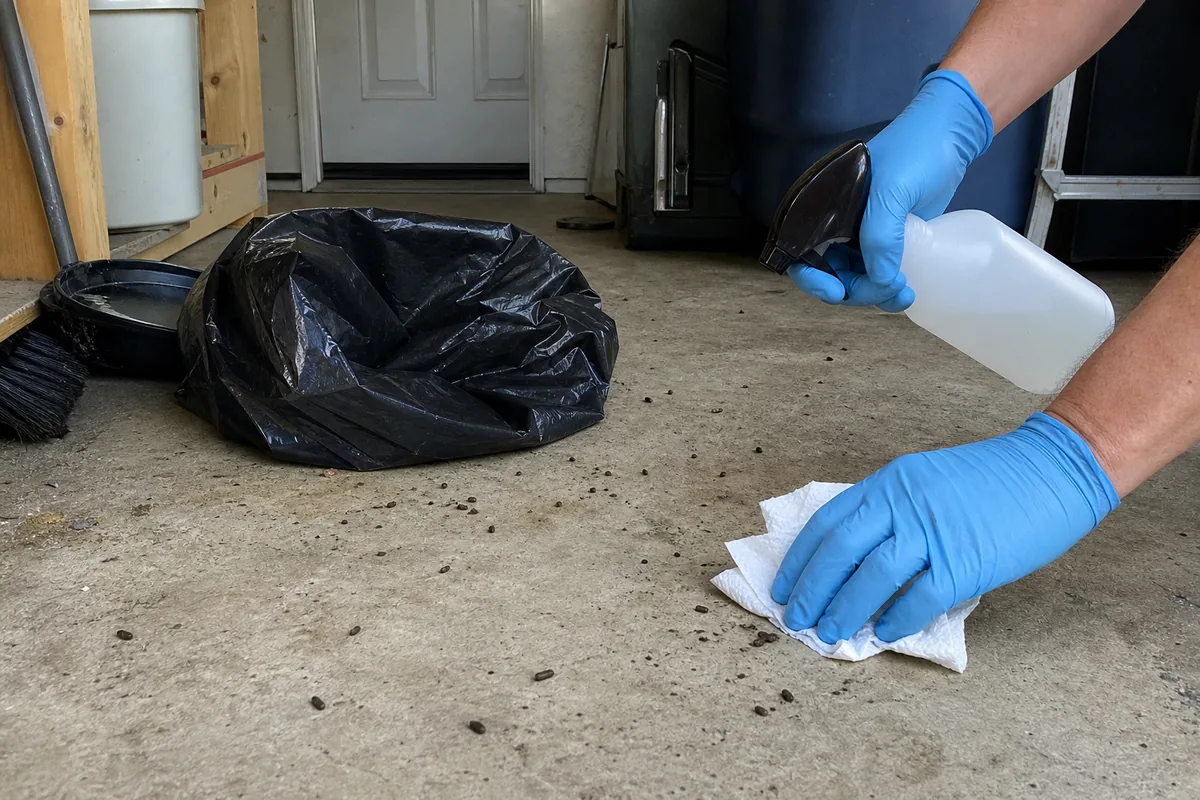
Avoid raising dust. The CDC states, "Don't vacuum or sweep rodent urine, droppings, or nesting materials." Use wet cleaning methods instead.
If you choose bleach, Washington State’s Department of Health gives the exact mix: "Mix 1½ cups of household bleach in 1 gallon of cold water (or 1 part bleach to 9 parts water)." Wet the waste and the area first. Let the disinfectant sit long enough to work. Wipe with disposable towels. Bag waste and throw it out with household trash.
Wear disposable gloves during cleanup. Wash hands well after. Keep people and pets away until the area is dry.
Keep it sealed and screened
Inspect those same gaps each season. Caulk can crack. Weatherstripping can compress. Door sweeps can wear. Renew and tighten as needed.
Screens do double duty. Tight screens help keep pests out and boost airflow control. While you are at it, see how to keep mosquitoes out of your yard. Good screening habits pay off across the yard and house.
Finish with a simple rhythm. Find and seal pencil-width gaps. Place traps along the walls they use. Clean droppings with wet methods only. Recheck seals after big temperature swings and storms.
Blocking mice is not just pest control. It also improves comfort and can cut wasted energy, as the Department of Energy notes. That is how to keep mice out of your house the practical way.
Sources
- CDC – How to Seal Up to Prevent Rodents (April 8, 2024)
- CDC – How to Clean Up After Rodents (April 8, 2024)
- CDC – How to Trap Up to Remove Rodents (April 8, 2024)
- CDC – Preparedness and Safety Messaging for Hurricanes, Flooding, and Similar Disasters (Key Messages)
- U.S. DOE – Building America Best Practices: Energy Renovations—Insulation (May 2012)
- Washington State Department of Health – Safely Cleaning Up After Rodents (DOH 420‑569, Jan 2024)